
Flagstaff Court Docket Records
Flagstaff Municipal Court processes misdemeanor criminal cases and traffic violations that occur within Flagstaff city limits in northern Arizona's high country. The court docket system tracks all case proceedings from initial filing through final resolution, recording charges, court dates, hearings, and sentencing information. Flagstaff Municipal Court is located at 101 W. Cherry Avenue in downtown Flagstaff and operates Monday through Friday during regular business hours to serve defendants, attorneys, and members of the public who need access to court services or docket information. The court handles criminal misdemeanors, traffic citations, and city ordinance violations for Arizona's largest mountain community.
Flagstaff Quick Facts
Flagstaff Municipal Court Overview
Flagstaff Municipal Court has jurisdiction over misdemeanor offenses committed in Flagstaff. These include shoplifting, theft under $1,000, assault, disorderly conduct, criminal damage, and trespassing. Traffic violations make up a large portion of the court's caseload. DUI charges, reckless driving, driving on a suspended license, and speeding tickets all go through Municipal Court. City code violations also appear on the court docket. These include noise complaints, property maintenance issues, and animal control matters.
The court homepage at www.flagstaff.az.gov/1203/Municipal-Court provides information about court operations, hours, and services available to defendants and the public.
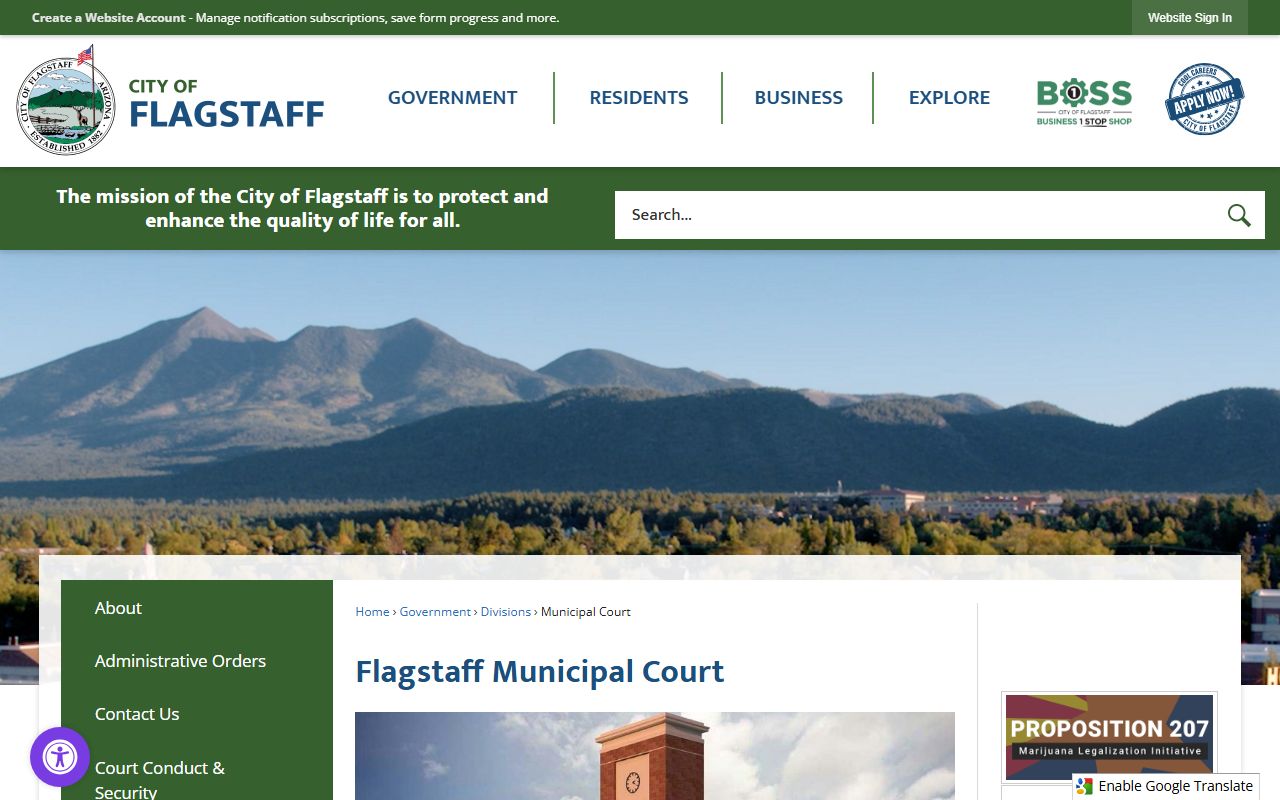
This screenshot shows the court's main website with links to court services. The site includes information about filing procedures, payment options, and how to request records.
Each case receives a docket number when charges are filed. The docket tracks everything that happens in the case from beginning to end. It shows the defendant's name and the charges. It lists all court dates. It records what happened at each hearing. When someone pleads guilty, the docket shows the plea and the sentence. When a case goes to trial, the docket shows the trial date and verdict. If charges get dismissed, the docket records the dismissal and reason if provided.
Requesting Court Records
The records request page at www.flagstaff.az.gov/4501/Records-Request explains how to request copies of court documents including docket sheets, judgments, and other case records.
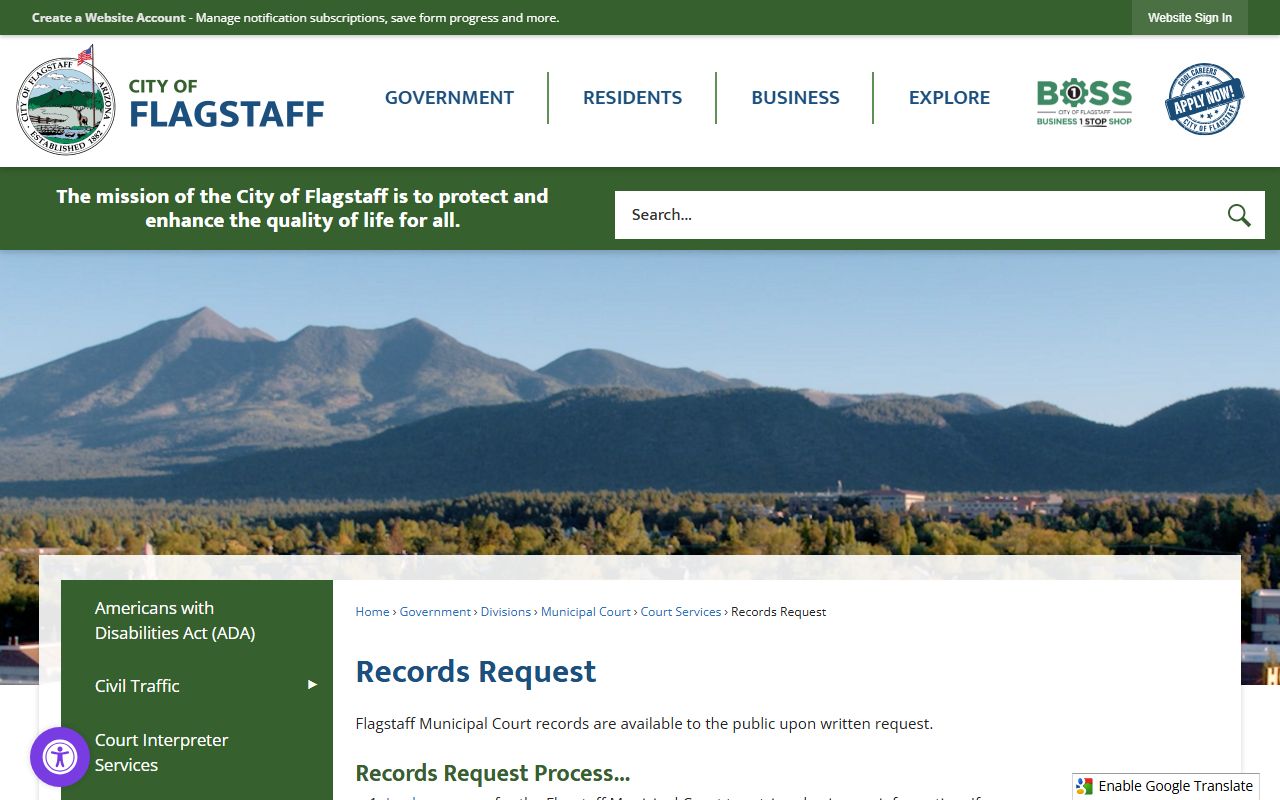
This screenshot shows the records request information page with instructions for obtaining copies. The page explains fees, processing times, and the types of records available to the public.
Standard copies cost 50 cents per page. Certified copies have an additional fee. You can request records in person at the courthouse, by mail, or through the online form. Include the case number and specify which documents you need. The clerk's office processes requests in the order received. Simple requests may be ready within a few days. Complex requests with many documents take longer. Payment is due when you pick up the records or before they are mailed to you.
Understanding Court Dockets
A court docket is the official record of everything that happens in a case. When charges are filed, the court creates a docket and assigns a case number. That number stays with the case until it closes. The docket shows the defendant's name, the charges, and the filing date. As the case moves forward, court staff add new entries to the docket. Each court appearance gets recorded. The docket shows the date and what happened in court.
If the defendant pleads guilty, the docket records the plea date and the sentence imposed. If the case goes to trial, the docket shows the trial date and verdict. If charges are dismissed, the docket notes the dismissal and reason. Motion entries show when attorneys file legal papers and how the judge ruled. Sentencing entries show fines, jail time, probation, or other conditions ordered by the court. The docket creates a complete timeline of the case from start to finish.
Most court dockets are public records. Anyone can request docket information from the clerk's office. Some cases have restrictions. Juvenile cases are confidential. Domestic violence cases may have protected information. Mental health records are sealed. But most criminal and traffic dockets are open to the public. You can visit the courthouse or call to ask about docket information for specific cases.
Court Services and Contact
The court services page at www.flagstaff.az.gov/4127/Court-Services provides contact information and details about services available at Flagstaff Municipal Court.
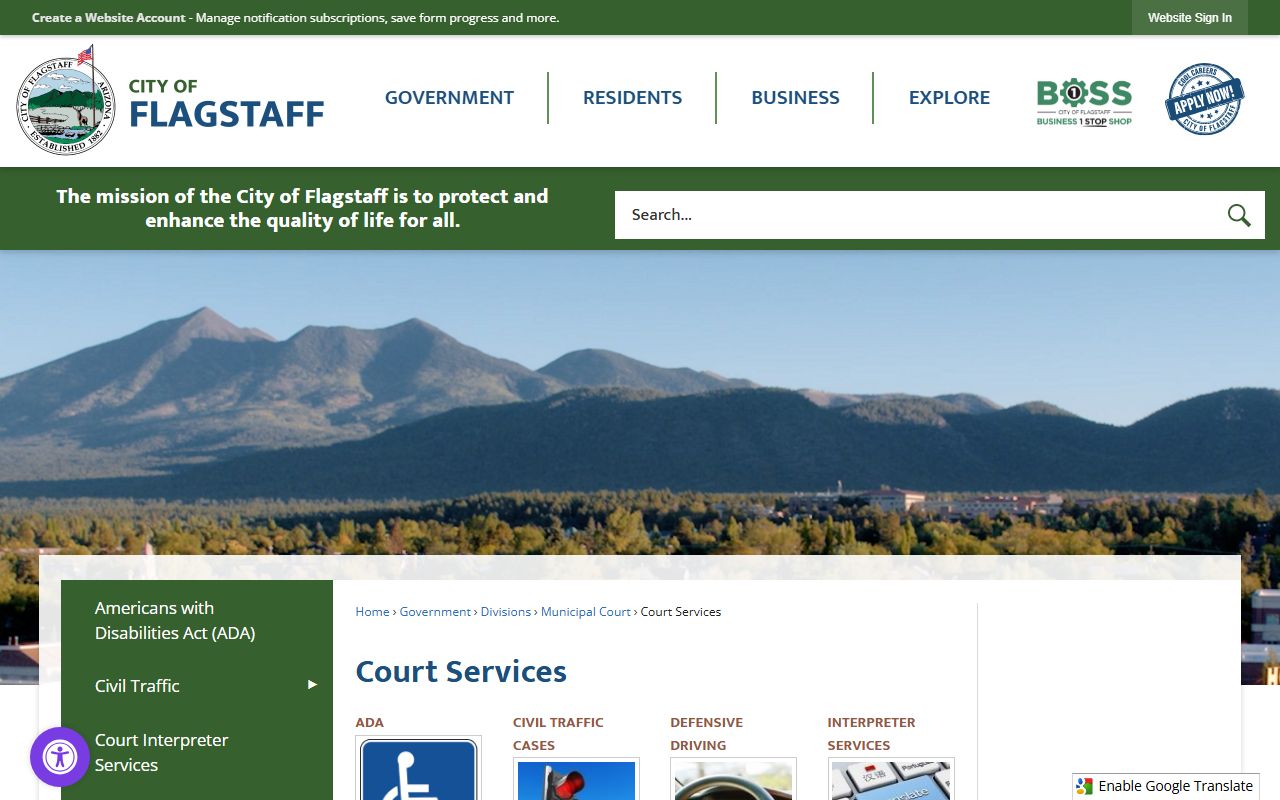
This screenshot shows the court services page with phone numbers, hours, and information about different court divisions. The page helps defendants understand how to contact the right department for their needs.
You can contact the court at 928-213-3000 with questions about your case, court dates, or payment options. Court staff can provide basic information over the phone. For detailed questions about your case or legal advice, you need to speak with an attorney. The court clerk cannot give legal advice but can answer procedural questions about how to file documents, make payments, or request copies of court records.
Coconino County Court Connection
Flagstaff is located in Coconino County. Municipal Court handles misdemeanors in Flagstaff city limits. Coconino County Superior Court handles felonies, large civil cases, family law, and probate matters. If a misdemeanor case gets upgraded to a felony charge, the case transfers from Municipal Court to Superior Court. The Municipal Court docket will show the transfer date. A new docket begins in Superior Court with a different case number.
Felony crimes like burglary, aggravated assault, theft over $1,000, and drug offenses go directly to Superior Court. They do not appear in Municipal Court records. The Clerk of Superior Court in Flagstaff maintains records for all Superior Court cases in Coconino County. Superior Court maintains its own docket system separate from Municipal Court. You need to search the appropriate court based on the type of case.
Coconino County also operates Justice Courts that handle misdemeanors outside city limits. Flagstaff Justice Court, Williams Justice Court, and Page Justice Court each cover different geographic areas. Justice Courts have their own records systems. Each court maintains separate dockets. You need to contact the appropriate court based on where the case was filed.
Court Location and Hours
Flagstaff Municipal Court is at 101 W. Cherry Avenue, Flagstaff, AZ 86001. The court is in downtown Flagstaff with parking available in nearby lots. The court is open Monday through Friday, 8:00 AM to 5:00 PM. The phone number is 928-213-3000. Call with questions about court dates, payments, or procedures.
Walk-in services are available during business hours. You can file documents, make payments, or request copies of court records. Bring valid identification when you visit. The clerk's office can answer procedural questions and process payments. They cannot provide legal advice. If you need legal representation, contact a private attorney or inquire about public defender services if you qualify.
Payments can be made in person, by mail, or online depending on the payment type. The court accepts cash, checks, money orders, and credit cards. For certified copies of court documents, submit a written request to the clerk's office. Include the case number and specify which documents you need. Fees apply for copies and certification. Processing time varies based on the complexity of the request.
Other Arizona City Courts
Other large cities in Arizona operate their own municipal courts. Phoenix, Tucson, Mesa, Chandler, Scottsdale, Glendale, Gilbert, and Tempe all have independent court systems with their own docket records. Each court handles cases that occur within its city limits. Cases filed in one city remain in that city's court. Search the appropriate court based on where the offense occurred.