
Coconino County Court Dockets
Court dockets in Coconino County are managed by the Clerk of Superior Court and three Justice Courts in Flagstaff, Williams, and Page. The county seat is in Flagstaff where the main Superior Court facility is located at 200 N. San Francisco Street, serving the second-largest county in Arizona by land area including the Grand Canyon region and northern Arizona. All criminal felony cases, family law matters, probate proceedings, and civil disputes over $10,000 appear on Superior Court dockets maintained by the clerk's office.
Coconino County Quick Facts
How to Access Court Dockets
The Clerk of Superior Court office handles all requests for court dockets and case records from the Superior Court. Call 928-679-7600 to reach the clerk. The office is at 200 N. San Francisco St., Flagstaff, AZ 86001. Hours are Monday through Friday from 8:00 AM to 5:00 PM. The clerk can help you find cases by name or case number and explain what documents are in the court file. Bring identification when visiting the courthouse as all visitors must pass through security screening before entering the building.
Online access to court dockets is available through the statewide Public Access to Court Case Information portal at apps.azcourts.gov/publicaccess, which covers 177 courts across Arizona including Coconino County. You can search by party name or case number. The system shows the case type, charges or claims, hearing dates, and disposition status. This free portal lets you view court docket summaries without creating an account or paying fees. The information updates regularly as new filings are processed and hearings take place, so you can check back to see recent activity on a case that is still pending in court.
If you need official copies of court documents, the clerk charges 50 cents per page for standard copies. Certified copies cost $35 per document plus the per-page copy fee. Certification adds an official stamp and signature from the clerk, which some agencies and courts require to verify authenticity. Postage is $8 if you need documents mailed to your address. Payment can be made with cash, credit cards, money orders, or business checks at the clerk's office.
The screenshot below shows the Clerk of Superior Court main page at coconino.az.gov, where you can find contact information and learn about the services offered by the clerk.
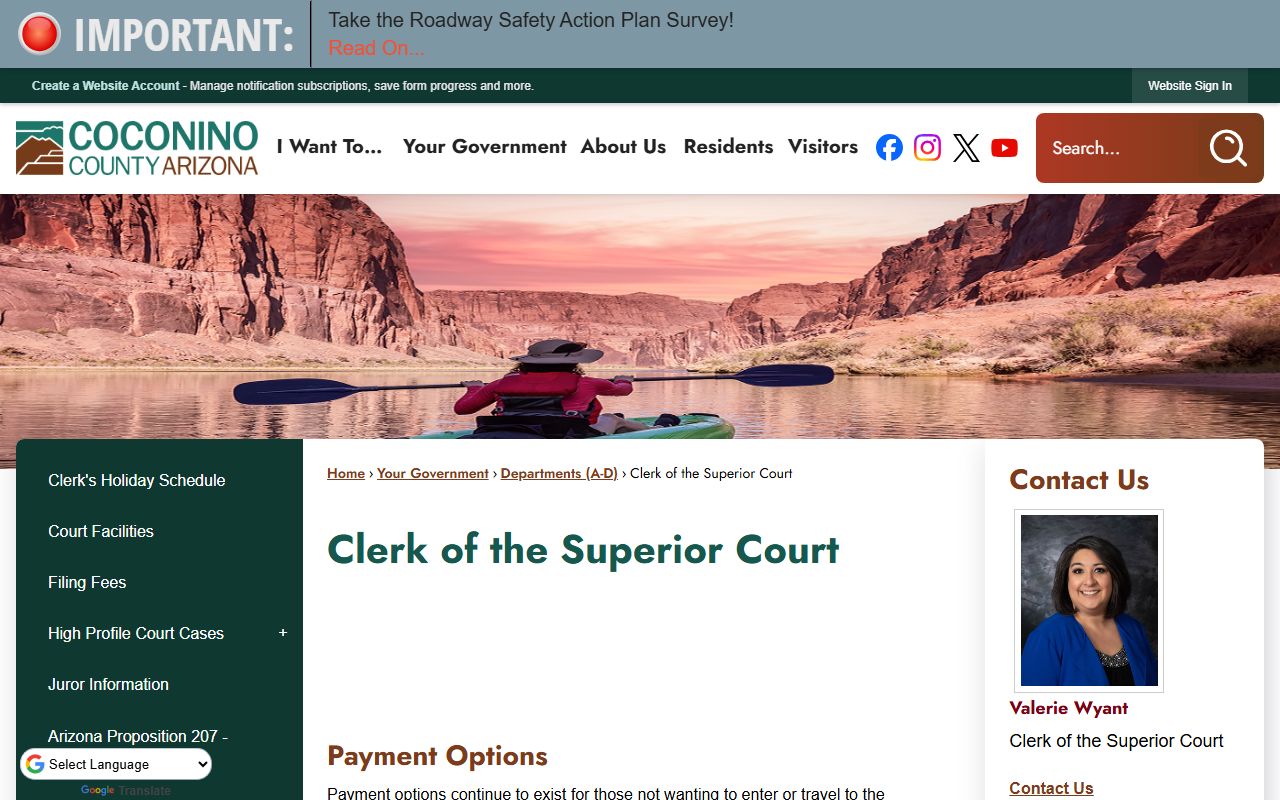
This page explains the clerk's duties, which include maintaining all Superior Court case files, recording court orders and judgments, collecting filing fees, and issuing certified copies of court documents to the public.
Superior Court Case Types
Superior Court in Coconino County handles felony criminal cases such as aggravated assault, burglary, drug trafficking, theft over $1,000, fraud, and serious DUI offenses. The court docket for a criminal case lists the defendant's name, charges filed, the prosecutor handling the case, the defense attorney, all hearing dates, plea agreements if any were reached, trial dates, and the final outcome which may include prison time, probation, fines, or restitution orders. Each entry on the docket shows the date of the action and what occurred, creating a chronological record of the case from initial filing to final disposition. You can see when arraignment happened, whether pretrial motions were filed, if the case went to trial or was resolved by plea, and what sentence was imposed.
Civil cases in Superior Court include personal injury lawsuits from car accidents or medical malpractice, contract disputes between businesses or individuals, property disputes over ownership or easements, landlord-tenant cases involving large amounts, and business litigation. The court docket shows the plaintiff who filed the case, the defendant being sued, the type of claim, when the complaint was served, the answer from the defendant, all motions filed by both sides, hearing results, and the final judgment. You can track how long the case has been pending and what stage it is currently in by reading the docket entries.
Family law cases make up a significant portion of court dockets in Coconino County. These include divorce petitions, legal separation, child custody modifications, child support enforcement actions, paternity cases, and orders of protection. The docket identifies both parties, the case type, filing date, temporary order hearings, settlement conferences, trial dates if the case is contested, and the final decree or order. Some details in family cases may be sealed to protect children's privacy, but the basic docket information showing the case status and hearing dates is generally public. Parties are often required to attend mediation before going to trial, and the docket will reflect whether mediation occurred and whether it successfully resolved the dispute.
Probate cases appear on court dockets when someone dies and their estate must go through court. The docket shows the decedent's name, the personal representative appointed to handle the estate, creditor claims filed against the estate, inventory of assets, and distribution orders. Guardianship and conservatorship cases are also in probate court when the court appoints someone to care for a minor child or an incapacitated adult. The docket lists the protected person, the guardian or conservator appointed, annual reports, and court reviews to ensure proper management.
Not all cases are public. Juvenile delinquency matters are confidential under Arizona law. Mental health proceedings are sealed. Adoption records cannot be accessed by the public. If a case has been sealed by court order, it will not appear in any public search even if you know the case number exists.
Superior Court Divisions
Visit coconino.az.gov/184/Coconino-County-Superior-Court to learn about the different divisions within the Superior Court system.
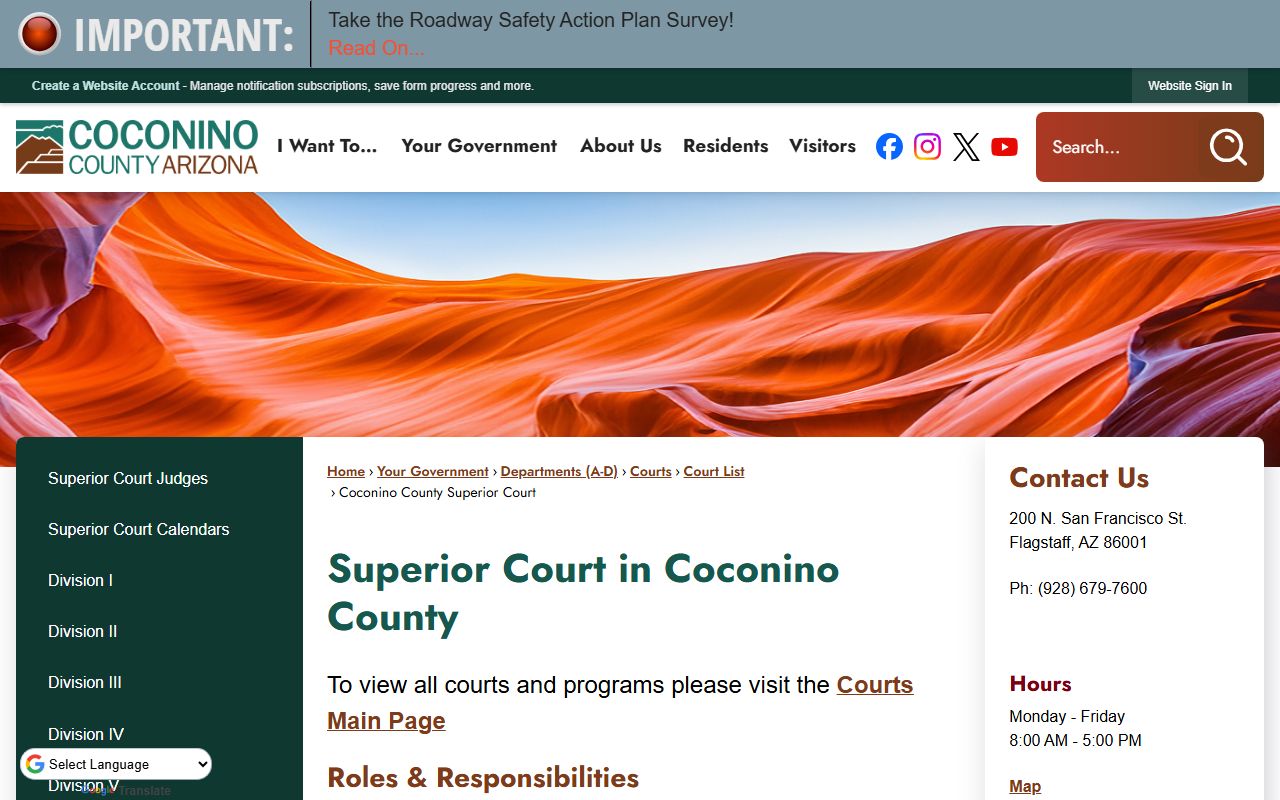
This page explains how Superior Court is organized into separate divisions for criminal, civil, family, juvenile, probate, and tax cases. Each division has its own judges, procedures, and forms. Understanding which division handles your case type helps you find the right courtroom and know what to expect during the legal process.
Justice Court Records
Coconino County has three Justice Courts. The Flagstaff Justice Court at 928-679-7650 handles cases in and around the county seat. Williams Justice Court serves the western part of the county. Page Justice Court covers the northern region near Lake Powell. Justice Courts handle misdemeanor criminal cases such as shoplifting, simple assault, DUI first offense, and traffic violations. They also hear civil cases up to $10,000, small claims up to $3,500, and eviction actions.
Each Justice Court maintains its own case files and court dockets. You must contact the specific precinct where the case was filed to get records. The Flagstaff Justice Court is shown at coconino.az.gov/510/Flagstaff-Justice-Court in the screenshot below.
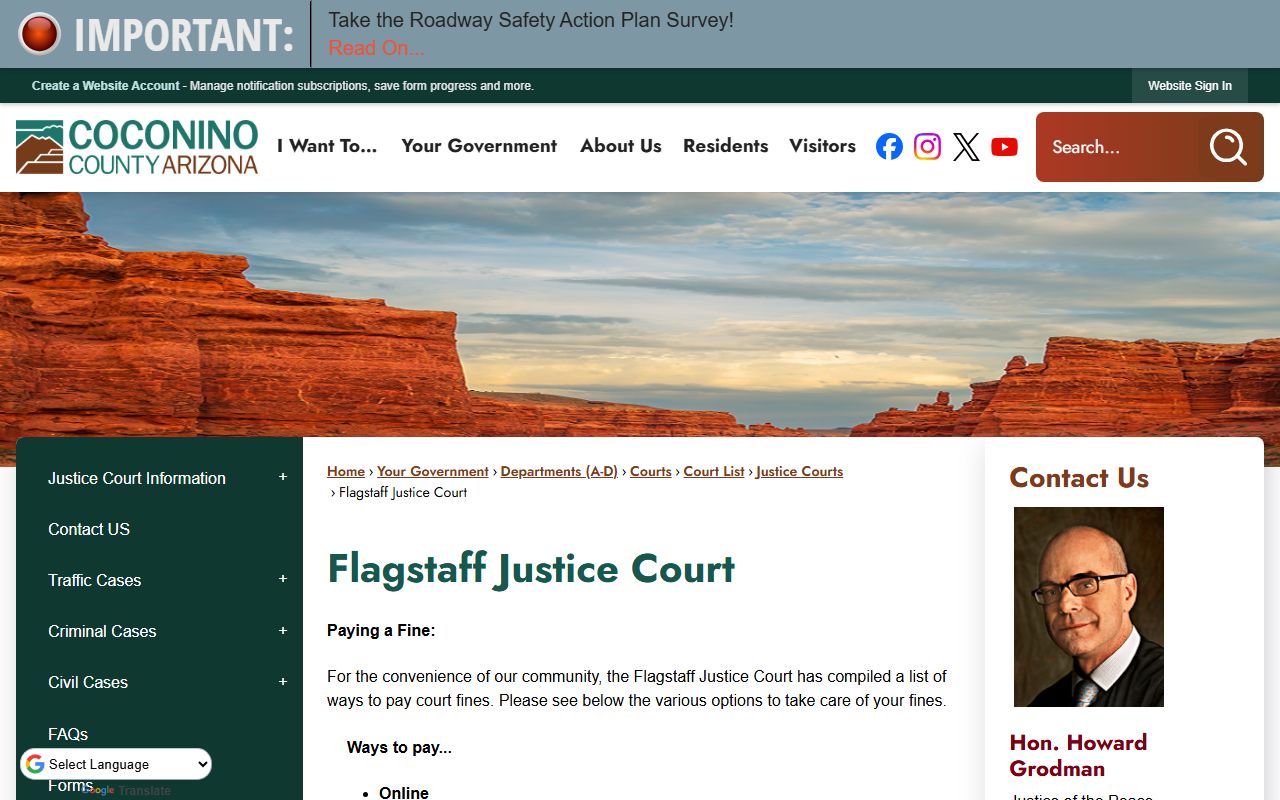
This page provides the court's location, hours, phone number, and information about how to find your case or pay fines and fees related to Justice Court matters.
Justice Court dockets show the defendant or plaintiff names, case number, charges or claims, citation or ticket number if applicable, hearing dates, and the outcome such as guilty plea, dismissal, or trial verdict. Many Justice Court cases are resolved quickly with a plea agreement or payment of fines. More complex cases may require multiple hearings before final resolution.
Requesting Court Documents
You can request court documents in person, by mail, or through the statewide eAccess system. In-person requests are made at the Clerk of Superior Court office in Flagstaff. Walk in during business hours. Tell the clerk what case you need and which documents you want copied. They will retrieve the file from storage and make copies for you. Pay at the counter when you pick up the copies.
For mail requests, write to Clerk of Superior Court, 200 N. San Francisco St., Flagstaff, AZ 86001. Include the case number, party names, a list of documents needed, and your mailing address. Add payment by money order or check. Remember to include $8 for postage and handling so the clerk can mail the documents back to you. Processing time depends on how busy the clerk's office is and may take several weeks. Be patient and plan ahead if you have a deadline for getting the documents.
The eAccess system at eaccess.azcourts.gov allows you to purchase court documents online for $10 per document. Create an account with your email and credit card. Search for the case by party name or number. Select which documents you want to download. The system charges your card and provides PDF copies you can save or print. This option is faster than mail but costs more than getting copies in person from the clerk.
Cities in Coconino County
Coconino County includes one qualifying city with a population over 50,000:
- Flagstaff - Flagstaff Municipal Court handles city ordinance violations and minor criminal cases within city limits
Flagstaff operates its own Municipal Court separate from the county Justice Courts. For cases involving city laws or offenses that occurred within Flagstaff city limits, check the Municipal Court first before searching county records.
Note: Smaller communities such as Williams, Page, Sedona, and Tusayan do not have Municipal Courts and instead use the county Justice Court system for all local cases.
Nearby Counties
If your case was not filed in Coconino County, check the neighboring counties that border this region:
- Yavapai County to the south
- Navajo County to the east
- Mohave County to the west
Each county maintains its own court system and records. If someone was arrested or served with legal papers in another county, that is where you need to search for court dockets and case information.